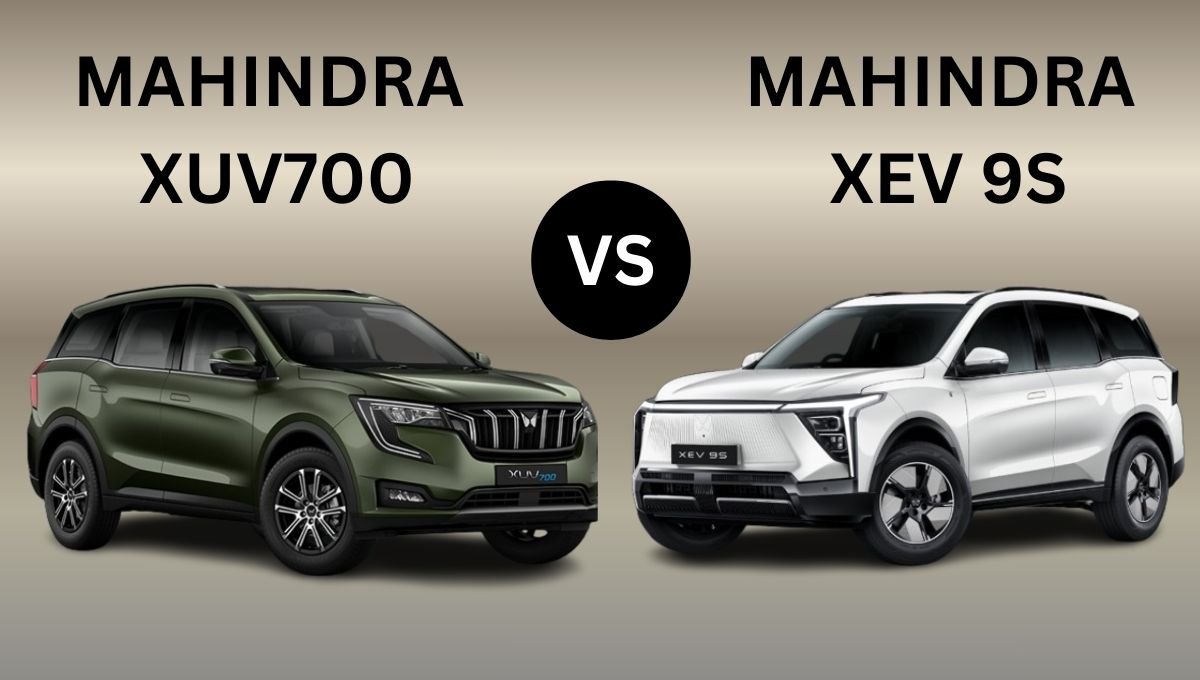
The Mahindra XEV 9S represents the company’s fresh push into the electric SUV segment, while the XUV700 continues as its strong and trusted ICE model. This makes their design approach quite different from the first look itself. The XEV 9S has a future-ready appearance with a closed grille, clean surfaces and EV-style LED lights. On the other hand, the XUV700 carries the familiar bold SUV look with a wide grille and muscular body lines. Together, they show how Mahindra is balancing modern electric styling with classic SUV design Mahindra XEV 9S vs XUV700.
Mahindra XEV 9S vs XUV700 — Interior & Features
Here’s a simple table that highlights the main differences in design, features and cabin practicality :
| Feature / Aspect | XEV 9S | XUV700 |
| Dashboard & Screens | Triple 12.3-inch screens (driver + infotainment + co-passenger); very modern | Dual displays or digital+analogue setup; not as futuristic |
| Steering & Controls | New-age 2-spoke steering with minimal buttons and digital controls | Traditional 3-spoke steering wheel |
| Seating Layout | 7-seater; sliding second row; flat floor gives better legroom; fold-flat third row | 6- or 7-seater; fixed second row; raised transmission tunnel |
| Convenience & Tech | Ambient lighting, wireless charging (front + rear), ventilated seats, advanced climate control, ADAS, possible AR-HUD | Dual-zone AC, basic lighting, limited premium features depending on trim |
| Practicality & Storage | The EV’s under-floor battery gives the cabin a flat floor and also frees up a 150L frunk in addition to the main boot | Gets the usual SUV boot, no frunk, and a standard raised floor layout. |
The XEV 9S is built to feel modern, spacious and tech-loaded, while the XUV700 sticks to a tried-and-tested SUV interior that many buyers already trust.
More Information : Mahindra XEV 9S
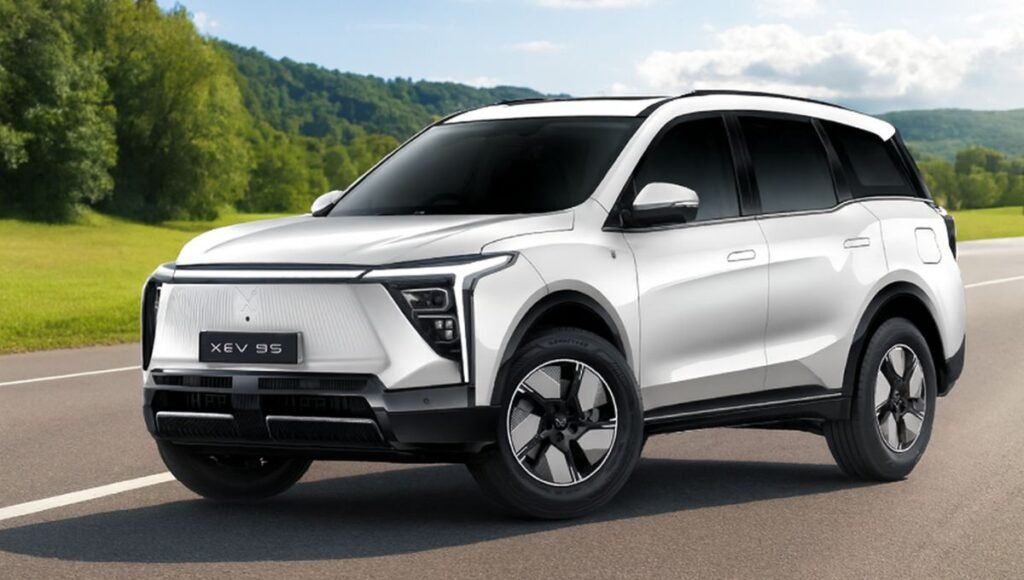
Mahindra XEV 9S
Mahindra XEV 9S & XUV700: Powers Them
One major reason both SUVs look and feel so different is their powertrain.
XEV 9S (Electric SUV) :
- Fully electric with 3 battery options: 59 kWh, 70 kWh, 79 kWh
- Power: 231 PS to 286 PS depending on variant
- Torque: around 380 Nm
- Range (MIDC): 521 km (59 kWh) to 679 km (79 kWh)
- EV platform allows : Flat floor , More cabin space , Cleaner exterior design , Extra storage (frunk)
This electric layout gives the XEV 9S a smooth, futuristic shape with better aerodynamics.
XUV700 (Petrol / Diesel SUV) :
- 2.0L turbo-petrol and 2.2L diesel engine options
- Manual and automatic transmissions
- Traditional engine, gearbox and fuel tank layout
- Needs a real grille for cooling, exhaust, and airflow
Because of this, the XUV700 follows a classic SUV design, with bigger openings, more aggressive styling, and a traditional cabin structure.
More Information : Mahindra XUV700
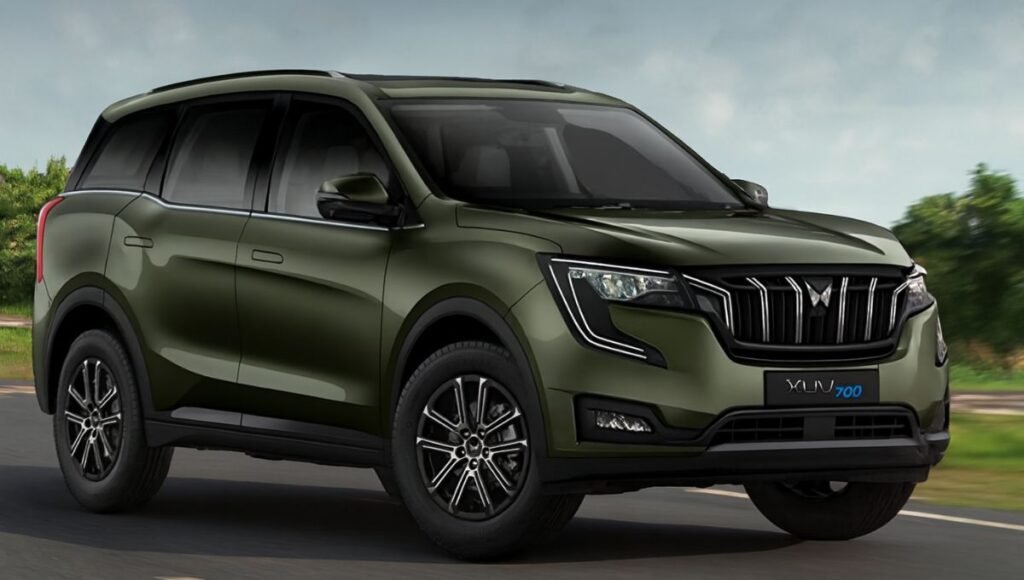
Mahindra XUV700
Mahindra XEV 9S & XUV700 Design
| Design Element | XEV 9S | XUV700 |
| Front Look | Closed grille, EV signature lights | Wide grille, muscular bumper |
| Side Profile | Flush handles, smooth lines | Traditional handles, strong creases |
| Rear Design | Full-width LED bar | Split tail lamps |
| Overall Feel | Futuristic & clean | Bold & familiar |
Mahindra XEV 9S & Mahindra XUV700 Price (2025)
Mahindra XEV 9S Price
- Starts at ₹19.95 lakh (ex-showroom)
- Higher variants with bigger batteries come around ₹25.45 lakh – ₹29.45 lakh
Mahindra XUV700 Price
- Wide range because of multiple engine + gearbox choices
- Generally more affordable in entry trims compared to the XEV 9S
- Price : ₹13.66L – ₹23.71L (ex-showroom)
Choose the XEV 9S if you want :
- A next-gen 7-seater electric SUV
- Futuristic design inside and out
- Lower running cost
- Spacious cabin with flat floor
- Premium features and technology
Choose the XUV700 if you prefer :
- A traditional SUV feel
- Proven petrol/diesel engines
- Familiar driving and refueling
- Lower starting price
- Strong performance and wide service network
The Mahindra XEV 9S shows where Mahindra’s future is headed — modern design, EV power, advanced tech and loads of space. The XUV700 remains a strong favourite for buyers who still want a classic SUV with reliable engines and a more accessible price.
Both are solid choices—but your pick depends on whether you’re ready for an electric future or want the comfort of a traditional SUV.
Also Read : Tata Sierra Old vs New: A Bold Comeback Story